.

Wednesday, 27 June 2012

Mumtaz


   “Some men, on leaving this vale of tears, are fortunate enough to leave behind them tangible and lasting evidence of their greatness. Their memories are perpetuated in the minds of generations to come by, perhaps, books they have written, discoveries they have made or edifices they have designed.
   What man living today, can pick up a copy of Oliver Twist without the magic name of Dickens immediately springing to mind? Who can look at an apple without thinking of Sir Isaac Newton (Discoverer of the Law of Gravity) or, perhaps, William Tell? A dullard, too, must he be who, on looking at a postcard of the Taj Mahal, does not remember Shah Jehan and his wife Mumtaz.”

From “The Journal of Edwin Carp” edited by Richard Haydn.


Sunday, 17 June 2012

Musings of a Methodist Apostate


Some inhabit their heart
And drown.

Others live in the mind,
That spectral tenement
Full of clamour and doubt

(There are also those who patrol
The dungeons of the groin
Beating the walls with frantic fist).

But the happy live in their nose
Where the world comes to them
And, should the Black Death call by,
May blossom enthralls
Even when not there.


SRP


Saturday, 2 June 2012

A Clash of Cultures


   Two or three decades ago when speeding through the streets of Dublin in a white van laden with building materials I passed the Chester Beatty Library and noticed it was hosting an exhibition of Muscovite enamels, so, instead of racing on to the house I was supposed to be working on, I slewed into the library's gravel drive and wedged my battered charger amongst a smattering of shiny cars.

   It turned out they were about to broadcast a television programme about the enamels – various technicians were dragging cables about, some presenter type was combing his hair – everyone was too busy to mind my being there so I examined the exhibits on display and eventually discovered a weighty publication that described them. It was far too expensive for me to buy so I scanned a few passages. They described how in the 13th century the Mongols, during what was the only successful winter invasion of Russia (they charged up the frozen rivers on horseback giving no time for defenses to be organised), had sacked Moscow, at the time a beacon of civilisation, and murdered so many Muscovites that one of the techniques for enamelling, that of cloisonné - a word I'd never seen before - was lost for ever. This last fact intrigued me. The book explained that despite there being an example of something very similar to cloisonné in the main cabinet there was no example of this lost process in the collection on display - they did exist elsewhere, but their locations were not given. I asked an attendant where such enamelling could be found, he had no idea, however he did say that there was one person who was sure to know and that was the expert who was about to be interviewed for the television show. As we spoke that very woman was striding toward me on her way to two floodlit armchairs. What a stroke of luck!

“Ah! Excuse me, could you tell me where I could find an example of cloisonné?”

“What? Oh. Over there in the main cabinet.”

“No, that's a different technique. I'm looking for cloisonné - it's a lost technique.”

“Is it. Well look in the other cabinets.”

“I did and there's none. It says so here on page 247.”

   After a moment of intense mutual assessment we separated and she strode off to be questioned by someone more civil, whose hair was not full of cement dust and who knew how to pronounce cloisonné. And I took off in my white van, its spinning wheels scattering gravel and taking me forward to where I once was.


Tuesday, 29 May 2012

The Descent of Man


   As a child at school back in the sixties I remember being taken into a room, physically examined by an elderly medic and hearing him apply to me a big word I didn't understand, but whose tone and context told me was important, and possibly shameful, so I memorised it. It was before I knew how to use a dictionary. At the time the chief clues to word meanings were hung on the classroom walls. I remember the picture of an axe and being mystified by the spelling of the accompanying word – why the E at the end?

   The presence of an E at the end of AXE remained a mystery but the meaning of my big word didn't. After a while I learned that “underdeveloped” was every bit as shameful as I'd suspected.

   It's odd to think that I remember a particular word being said when memories of my early school days are normally so hazy, but then the handling of ones genitals without invitation by a towering stranger lends itself to recall. It's also odd to think that this manipulation was considered normal practice. Maybe it still is. Or perhaps nowadays the examiner uses some sort of electronic soup ladle (or teaspoon in cases like mine).

   I have long had a mental picture of my father being present at this institutional groping, I can see him slumping in resignation upon learning that his son was never going to be a caber tosser and was destined instead to lead a life of unalloyed milksoppery. I now suspect I added my dad to the scenario at a later date just to confirm the ritual humiliation of it all. The real interlocutor was probably a secretary with a clipboard, fountain pen poised to mark me down for life, stockinged legs scissored, strained lab coat threatening to catapult buttons-

   Anyway, sometime during the following years my genitals must have put on a metaphorical spurt as I remember engaging, as a cocky nineteen year old, in frenetic and seemingly concatenate bouts of copulation for months on end with an obliging girlfriend. I couldn't believe my luck and was far too hyperactive to worry about underdevelopment, that was until she referred to me as being “immature” a term that had uncomfortable echos of the U word. It came as a tremendous relief when she patiently spelt out to me, in what turned out to be our final conversation, that she was referring to my morbid jealousy, snide comments and all-round superficiality.


Thursday, 17 May 2012

Swings and Roundabouts


In Belarus a child counters the force of a bucketing merry-go-round, the cold steel warmed by his dissident grip.
One more revolution and the ride will be over. Time for the ghost train.


Tuesday, 1 May 2012

Of Hooves and Hats


I found this in a junk shop recently;


   It's a Hoof Fungus (Formes formentarius). It grows on various hardwood trees and, occasionally, conifers. The one I found is mounted on chipboard the formica veneer of which is peeling, an unattractive backing not worthy of the magnificent fungus. With my customary insight into these matters I deduced that someone had attached the fungus to a plaque that had originally been used in a perfumery as it is there that a word such as “Amadouvier” surely belongs.

   It turns out that “Amadouvier” is French for Hoof Fungus. It's somehow typical that the French word sounds suited to a perfume and that the English version is reminiscent of athelete's foot.
   Both its English and French names refer to physical characteristics, the English one is obvious, but the French term reveals a hidden and more sensual aspect – many say that it is ultimately derived from the Latin ad manum dulce, “soft to the touch”.


   “Amadouvier” is linguistically derived from “Amadou” which is physically derived from Amadouvier. Amadou is the “soft to the touch” spongy material found within the fungus. When amadou is dried after soaking in a solution of saltpetre the desiccated result is very easy to ignite with a spark from, for instance, a flint - some French sources claim that “amadou” is from a Provençal word meaning amoureux/loving (“because it ignites so quickly”...). Such tinder was among the possessions of “Ötzi the Iceman” who was murdered 5,300 years ago and found, mummified by icy conditions, in 1991 in the Ötzal Alps (the mountains between Austria and Italy).

   The less spongy form of amadou (that nearer the surface) is used by dry-fly fishermen to dry their flies. It is prepared by cutting it into slices and boiling them for a few hours or soaking them for a week in washing soda or urine. The dried end product (below) is one of the most naturally absorbent materials known.


   Amadou can also be worked like leather or processed like felt (whose processing also traditionally involved steeping in urine). These crafts are still practiced in eastern Europe, various items are made including table mats, handbags and headgear;


Mycologist Paul Stamets sporting an amadou trilby. Very natty.


I find something disturbing about this assembly of amadouvian creations; a sort of nightmare in fawn dreamt up by Joseph Beuys.


Thursday, 26 April 2012

Spotted in Africa


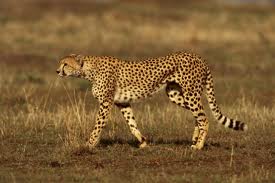
   I watched a televised nature documentary the other evening, it was set in the Kenyan plains, various familiar characters from such programmes were present; dead and dying rhinos with their horns hacked off to supply other people with other remedies, white people driving around in Land Rovers, black people scratching a living. The dominant character was a white woman who was studying mortality rates among big cats. The cats were regularly being killed by herdsmen whose livestock was under threat. Local Maasai people had informed her that the body of a big cat had been found in some remote spot so she drove out to identify the species. Surrounded by her informants our protagonist explained, with a practised forbearance, that identification in such cases was difficult without her seeing the animal for herself as the Maasai language didn't differentiate between “cheetah” and “leopard”.
   I suspect I wasn't the only armchair ethnologist to find this assertion surprising considering the Maasai have been living alongside these disparate types of feline for countless generations. I would wager that despite the supposed paucity of its vocabulary there is more than one word in Maasai for “self-proclaimed expert from elsewhere”.


Orkedi [Maa], or Spotty Cat [Eng.]


Olowaru keri [Maa], or Spotty Cat [Eng.]